



Understanding Car Vocabulary
Car culture can be a tough shell to break through. It’s full of unique vocabulary that doesn’t seem to pop up in other places. The key to feeling more closely connected with your ride, the car shopping process, and vehicles in general is to learn what some of these terms mean. Let’s go over a few of them. If you ever have any car questions, be sure to contact Cox Chevy.
Common Car Terms You Should Know
 Sedan: typically any average sized, four-door vehicle with for room with five passengers. An example of a sedan would the Chevy Impala or the Chevy Malibu.
 - Coupe: derived from the French word coupé, meaning cut, coupes are the edgier looking cousins of sedans. They typically come with only two doors and have more space in the front passenger area than in the rear. Rides like the Chevy Camaro or the Corvette are good examples of coupes.
- Compact: the smaller, four-door cousins of sedans. Examples of this include the Chevy Cruze and the Sonic.
- Crossover: this relatively newer term was invented to describe SUV-like vehicles that were smaller, more agile, and more fuel efficient. Good examples of crossovers in Chevy’s line include the Equinox and the larger Traverse.
- Horsepower and Torque: these two related terms describe the relative power in your engine. Horsepower is typically a measure of the high-end speed that your vehicle can provide, where as torque describes the overall strength of the engine. When you hear the term “low-end torque,” it means an engine can sustain great power at low revolutions, making it great for picking up speed on the road and hauling.
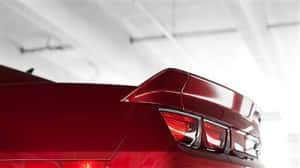
- Spoiler: ever seen that raised fin on the back of some coupes or sport cars? That’s a spoiler. A true spoiler adds an aerodynamic benefit to a vehicle, while others are purely for show.
- CVT: meaning “Continuously Variable Transmission,” a CVT is set up so it has an infinite number of gear ratios. This allows the engine to run at a closer to optimum efficiency, increasing fuel savings.
- Differential: this ingenious mechanism allows your wheels to spin at different speeds when you’re turning. Imagine spinning in a circle and holding someone’s hands while they spin around you. If you moved at the same speed, it wouldn’t work that well. The key is to spin at different speeds. This is what the differential achieves.
- Carburetor: chances are your vehicle doesn’t have a carburetor, or “carb,” unless you drive an older classic model or your lawnmower to work. Before fuel injectors, carbs were used to mix gasoline with air for proper combustion in your vehicle’s cylinders.




0 comment(s) so far on Understanding Car Vocabulary