



The Ins and Outs of Internal Combustion
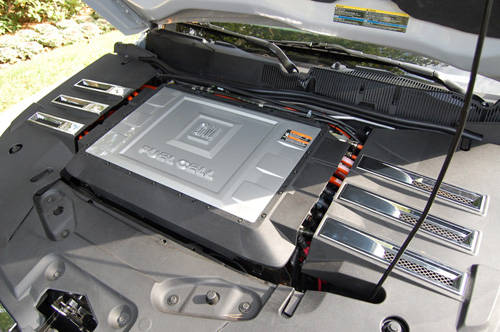
Internal Combustion Chevy Equinox
You know, it can get pretty confusing under the hood of your car these days. From high-tech computers to all kinds of different fuel options, things just aren’t as simple as they used to be. For a look back at simpler times, I thought it would be interesting to go over just how the combustion engine actually works, considering that it’s the driving force behind most vehicles on the road.
Put simply, an internal combustion engine is one in which the combustion of a fuel such as gasoline occurs in a combustion chamber that serves as a working, moving part of a larger mechanical system like a car.
If you ever took a physics course, you might remember a scientist by the name of Joule, who had an idea that physical work and heat were interchangeable. It’s this idea that explains how combustion leads to you speeding down the street in your car.
You see, the combustion reaction, something like a miniature explosion, generates an increase in heat and pressure when it occurs, so if it occurs in a chamber with, say, a moveable piston instead of a wall, you’ll convert the increased pressure into a force that drives the piston, which then eventually transfers that work on down to your drivetrain. Add in a handful of these pistons, and you have a very rough outline of how your car’s engine works.
One of the most difficult things to accept about any kind of engine, though, is that you will never get the power you want out of it. There are just too many stages between putting gasoline into your vehicle and getting your wheels turning, and each stage shaves off a tiny bit of the energy you’d like to go directly toward propelling your car, mostly due to noise and friction.
Internal combustion engines have been improving year after year, as evidenced by the steadily climbing fuel economy of most vehicles, but the laws of physics won’t ever let you convert all of the combustion energy into a propelling force for your car. The best you can do, aside from ensuring you have clean oil in your car to cut down on friction, is to hope that engineers can keep building a better engine, one that will eke out a few more miles per gallon than the last year’s model.





0 comment(s) so far on The Ins and Outs of Internal Combustion